
Pirkan päivän juhlapuhe: Saksan Suomen-suurlähettiläs Stephan Auer (engl.)
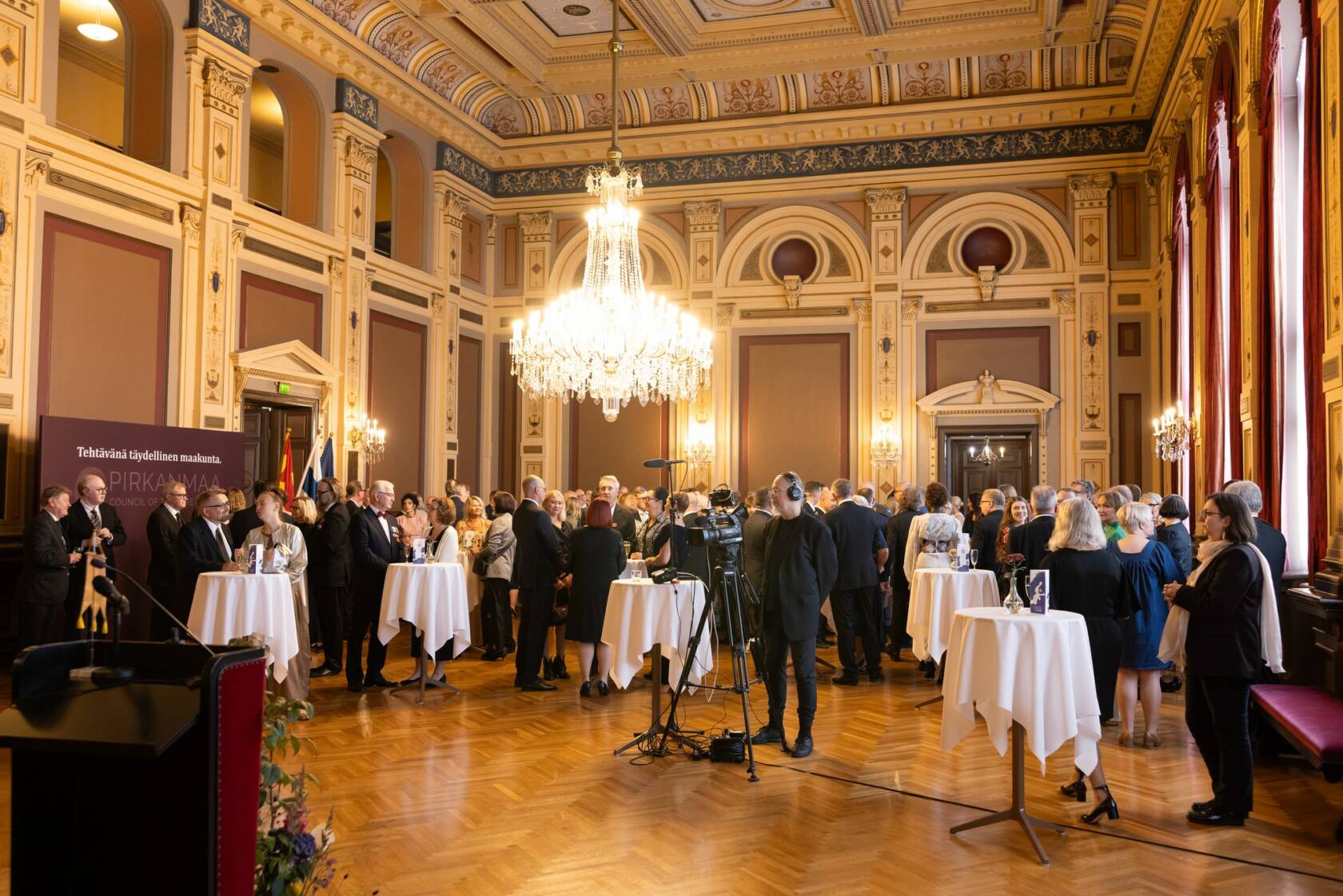
Excellencies,
Ms Rissanen,
Honourable Members of the Regional Council,
Distinguished guests,
Ladies and gentlemen,
It is a profound honour and a true delight for me to join you in celebrating Pirkanmaa Day. Leaving the capital and getting to know the diverse regions of your host country is one of the most interesting aspects of a diplomat’s work. And Pirkanmaa is a region that embodies the very best of Finland: a unique blend of breathtaking nature, industrial strength and a forward-looking spirit of innovation. Today, we celebrate not only the identity and the heritage of this region, but also the community and the vision that drive Pirkanmaa forward.
This isn’t my first visit to Tampere. I’ve been here a couple of times before, and I very much enjoyed the city’s beautiful industrial heritage, the Tammerkoski rapids and the impressive lake sceneries. I experienced the spirit of the old “Manse” – a city of workers, factory buildings and chimneys, where goods are produced. A city of go-getters rather than complainers. As a German, this is something I appreciate very much. But there’s still a lot more to discover. For instance, I haven’t yet had the chance to try your famous black sausage. But let’s see what’s on the buffet tonight. And, by the way, I haven’t yet been able to decide whether to support Ilves or Tappara, so please feel free to help me with this matter tonight!
I’m very grateful to have the honour to serve as an ambassador in Finland. As you know, we diplomats usually don’t have a free choice when it comes to our postings. But I was fortunate enough to have my wish to be posted to Finland realised by the Federal Foreign Office. This is why I didn’t end up completely innocently in this Nordic and cold country. Some people from not far away from where we are now even called it the land of a thousand sorrowful songs. But that was back in the 80s. Finland has since been identified as the happiest country in the world for the ninth time in a row. I know that you Finns are a humble people, and few would dare to openly agree with the outcome of the Global Happiness Index survey. But as I am no Finn, I can freely express the fact that I’m very happy to live in Finland, to enjoy beautiful and peaceful surroundings day by day and to see so many happy faces here tonight. Because, for us Germans, you’re not the last corner of Europe, but are one of our closest partners and allies and, most importantly, as Federal President Frank-Walter Steinmeier wrote in President Alexander Stubb’s guest book, “real friends”.
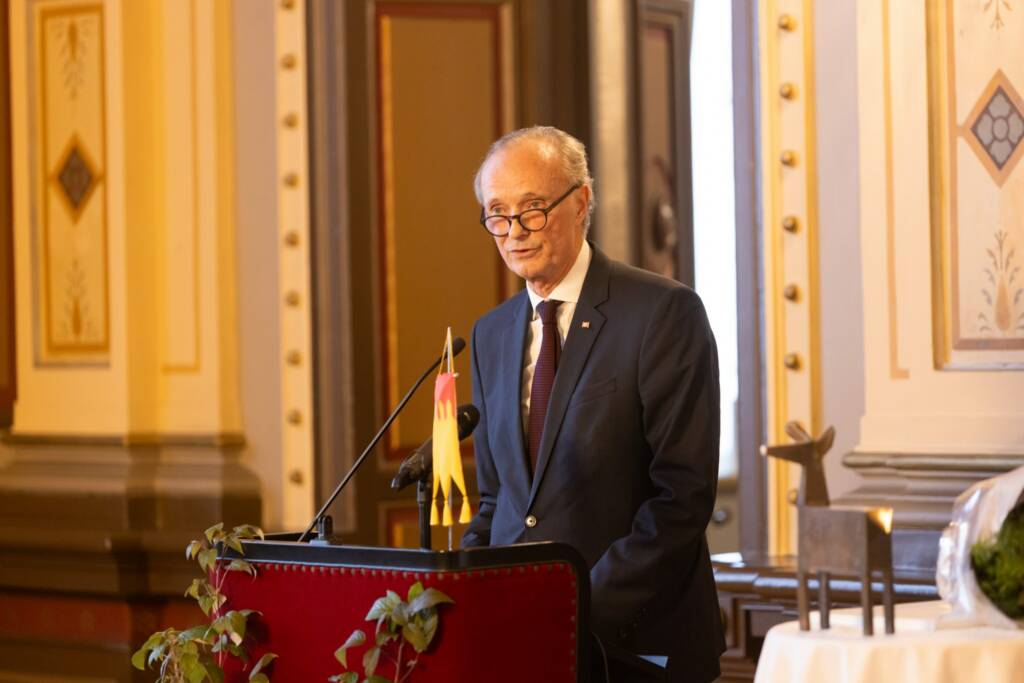
Finland and Germany are bound by so much more than just diplomatic relations. We have had strong cultural, economic and political ties for many centuries. We share the same values and we face the same challenges: economic growth, climate change, energy security, ensuring the security and stability of our European home, especially by supporting our heroic Ukrainian friends, dealing with an ageing population, and fostering the digital transformation of our societies. In all these issues, Germany and Finland stand side by side.
Ladies and gentlemen,
Europe’s social market economy and liberal democracies are increasingly under pressure. New crises pop up all the time and challenge our way of life and our economic system. Russia’s war in Ukraine is challenging Europe’s security; China’s aggressive economic policies are distorting international competition; natural disasters such as heatwaves and droughts caused by climate change are threatening our livelihoods; and ever new conflicts are increasing global uncertainty in world trade, as we witnessed most recently in the Strait of Hormuz. How can Europe protect its own interests in this complex situation? How can Germany and Finland, how can Pirkanmaa, keep up?
While we might not be able to resolve every single global crisis on our own, we can still focus on our core interests – security, freedom and prosperity – to make sure to have the best possible outcome. First of all, Europe is not defenceless. As the world’s largest economic bloc, we demonstrate our ability to act through new free trade agreements and global partnerships – I’d like, in particular, to mention the EU’s trade agreements with Mercosur and India. That’s why it’s so important that we coordinate our policies within the European Union – also regarding the multiannual financial framework, our common Union’s budget, where Germany and Finland are on the same page. For more than three years, Finland and Sweden have also been our allies in NATO. Needless to say, you have made our alliance stronger.
Together, we’re investing in our security, the resilience of our societies and the green transformation of our industries. In all of these matters, Finland is an excellent partner and a role model for Germany. Take, for instance, resilience: I lost track of how many political delegations have visited Finnish civil defence shelters – also here in Tampere. What’s more, literally nobody in Finland questions mandatory conscription. And you have a profound interest and determination to strengthen not only our transatlantic alliance but, in particular, its European pillar. So, great potential for Finnish-German cooperation lies in defence and security.
As NATO allies, Finland and Germany aim to increase their defence spending to five percent of their respective GDP. With its comprehensive approach to security, Finland demonstrates excellently how civil protection and military capabilities go hand in hand. This is something we’re looking at very closely when reforming our own security system. Moreover, Finland – and Pirkanmaa – can benefit from German investments in Finland’s defence industry. Germany is determined to take greater responsibility for Europe’s security – not as a political slogan but as boots and equipment on the ground. For instance, Germany is deploying a combat brigade of 5000 soldiers in Lithuania, assuming responsibility for the defence of NATO’s eastern flank. Or take Patria’s 6x6 as another example. The Bundeswehr is planning to replace its entire fleet of armoured personnel carriers with a product from Finland – a win-win situation.
In the energy sector, Finland and Germany have agreed to strengthen their cooperation. With this in mind, Federal Minister for Economic Affairs and Energy Katherina Reiche and Minister of Climate and the Environment Sari Multala signed a joint memorandum of understanding to lay the political foundations for that very cooperation. This is because Finland has enormous potential for producing climate-neutral hydrogen – potential that far exceeds that of Sweden or the Baltic countries. As Finland continues to expand its capacity for renewable energy, the amount of surplus electricity in the country will increase and you will have everything you need for building up Europe’s strongest green hydrogen industry. Furthermore, with potential for producing up to 10 percent of Europe’s total demand in green hydrogen, hydrogen exports for Finland might become what oil and gas exports have been for Norway – but cleaner, sustainable and future-oriented. Pirkanmaa has great potential for wind power, solar power and hydrogen production.
In Germany, there’s high demand for green hydrogen. If we manage to bring together supply and demand, we have a great opportunity to quickly build up a sound European hydrogen market. Finland – in the tradition of the industrial spirit of “Manse” – could be the engine room of that market safeguarding Europe’s energy security. The Finnish company Ren-Gas recently signed a long-term supply agreement with the Swiss company Avanca Energy and its German subsidiary Alternoil that covers renewable e-methane produced at Ren-Gas’s production facility here in Tampere. The total value of the agreement is one billion euro, which makes it one of the largest commercial agreements in the industry in Europe. Congratulations, Tampere!
Ladies and gentlemen,
I am sure every person here in this room has a smartphone in their pocket. Me too. But I was once the proud owner of my ever so faithful Nokia mobile phone from the 90s. The battery lasted for ages, and accidentally dropping it didn’t even leave a dent. It served me well for years. Much later, in 2015, I was part of a European delegation visiting Iran in order to implement the Iran nuclear deal. For security reasons, the European Union stripped us of our smartphones before we boarded the plane as they were apparently susceptible to cyber threats. They gave me an old Nokia phone to take with me to Iran as it was unhackable. Nowadays, Nokia no longer produces phones. However, they are now a world leader in network technology. We can be proud that this vital technology is being produced by a trustworthy European, Finnish company.
As you know, Nokia didn’t start off with phones and network technology, but with rubber boots. And we all know where everything began – not in the capital, but right here in Pirkanmaa. The history of that company taught me an important lesson about Finns and Finland: there are things that you can change, and there are things that you cannot change. In order to cope with the things that you cannot change, you have to be brave and embrace change yourself, adapt to new circumstances. You have to find new solutions, deal with setbacks, completely rethink old strategies and never give up. In a nutshell, you need sisu.
And, to be completely honest with you, when it comes to the digital transformation, we Germans have really lacked some sisu in recent years. I’m not talking about individual companies or start-ups but about our state: a functioning society needs a functioning state. Finland has demonstrated very well how things can be changed and how digitalisation can be achieved: from electronic health records to automated, pre-filled tax declarations. Finnish digitalisation builds trust in a well-functioning, efficient and smart government. This is something our decision-makers are very keen to learn from. Under Chancellor Friedrich Merz’s leadership, Germany has established a dedicated Federal Ministry for Digital Transformation and Government Modernisation. This clearly reflects our determination to adopt high-quality digital solutions for public administration and services. This is not only a chance for us to finally stop filling in paper forms or desperately trying to figure out how to operate a fax machine, but also a great opportunity for Finnish businesses to demonstrate and ultimately sell their solutions to German partners. And, maybe, provide us with a pinch of that fabled sisu.
There will continue to be unforeseeable crises and challenges in the future. What if Finland and Germany were to pool their resources? Where one country invests its capital, the other drives the green transition. Where one country exports digital services, the other conducts research into new defence technology. Finland and Germany can strengthen each other. If we continue to develop this partnership in a rational and consistent manner, we will prepare ourselves together for the challenges of the future.
Distinguished guests,
The bonds between our two countries are not exclusively shaped in Helsinki and Berlin. After all, as I said just now, Nokia didn’t emerge in Helsinki, and most big German companies weren’t established in Berlin. Furthermore, it was Tampere where Germany’s ice hockey team made it to the finals against Canada in 2023. And Düsseldorf, the capital of North Rhine-Westphalia, is where your team will be in the finals in 2027.So, it’s not just the capitals but the regions in particular that define us Europeans as who we are. I’m happy to see Tampere’s lively partnership with Essen and Chemnitz. The Finnish-German Friendship association of Tampere is extremely active, as is the German Cultural Centre with its diverse projects, situated right across the square in the Laikku building.
This is why I’m absolutely delighted that Pirkanmaa and the federal state of North Rhine-Westphalia are planning to sign an agreement this autumn that will strengthen our partnership and help us to face our common challenges. North Rhine-Westphalia is by far the most populated German federal state with 18 million inhabitants, boasting a vast variety of different industries and start-up ecosystems. Of Germany’s 20 largest cities, nine are situated in North Rhine-Westphalia. Its economy is the sixth-largest in the European Union. The possibilities for cooperation and trade will be immense.
North Rhine-Westphalia is also the 11th German federal state to have joined the European Semiconductor Regions Alliance (ESRA). So I’m all the more pleased to hear that Pirkanmaa will be holding the ESRA presidency in 2027. This is a great example of technological cooperation between the regions of Germany and Finland that will benefit Europe as a whole.
Ladies and gentlemen,
I’d like to thank you for having me and for giving me the chance to share my own thoughts on the future of Finnish-German relations with you. I wish you all a very pleasant evening, and I’m looking forward to expanding my network in the Tampere region tonight. And maybe I’ll get some help deciding between Ilves and Tappara.
Thank you very much!
(Photos: Opa Latvala)